

30 Days To Flexy: Day 11

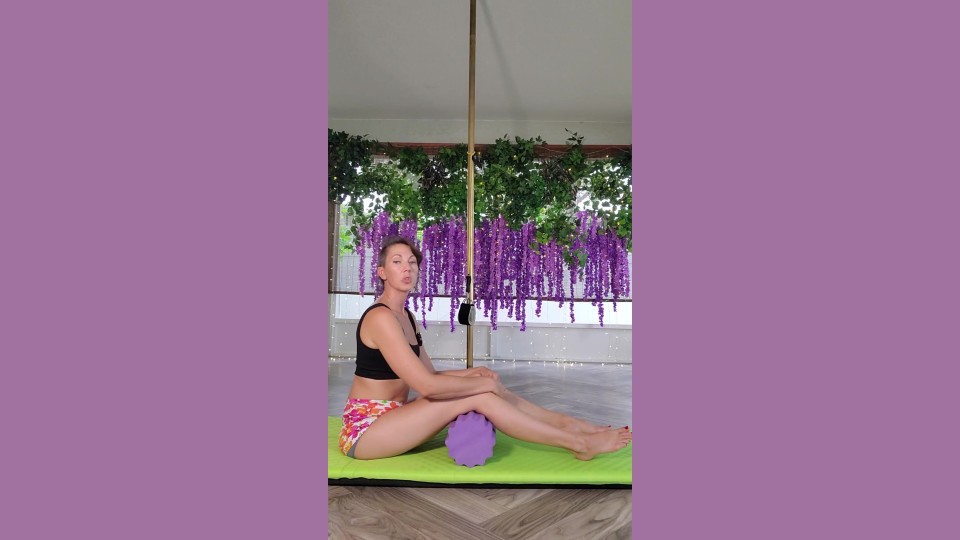
Duration: 00:34:24
Today you’ll be working with the third front/side splits class and learning how to avoid triggering the stretch reflex. I love hearing from you, feel free to message or leave a comment.
Mantra – I am confident
Pro tip: I want to remind you of the difference between stretching to maintain and stretching to gain, or what I call flexibility training.
Stretching to maintain: Is gentle and is done within a very comfortable range of motion. Like when you get out of the car after a long trip or stretch after waking up. It feels like relief and is instinctual.
Stretching to gain (flexibility training): Is what you’re doing in this class. It’s more intentional and aggressive with a goal of increasing your range of motion.
When stretching to gain, you need to be very aware of your own mind and body because in order to have success, you’ll need to avoid triggering the stretch reflex, which announces “something is wrong!” when triggered and will cause the area to contract and tense up.
Below, I have included a few flexibility facts that I believe to be true as demonstrated by various studies. However, much of how flexibility works is still a bit of a mystery, which is why I strongly feel you need to be an advocate for your body and do what feels safe and best for you. Don’t just do what someone tells you if it’s feeling bad in your body because they’re an “expert“. You are the expert of your own body.
- Muscle lengthening – Stretching does not make muscles permanently longer. Instead, stretching trains the nervous system to tolerate a greater degree of muscle extension without firing pain signals.
- Tendon lengthening – We want healthy, strong tendons that will support us. Trying to stretch tendons isn’t a good idea.
- Bone structure – Unless you have reconstructive surgery, stretching won’t change your bone structure. This means for some people, poses like middle splits are not possible. However, this doesn’t mean you shouldn’t train your middle splits.
- Neuromuscular response – When stretching is approached correctly, the nervous system can learn to tolerate a greater degree of muscle extension without firing pain signals.
- Fascia – Things like massage, foam rolling, and trigger point massage can help this web-like part of the body move more freely, therefore improving range of motion.
Items you’ll need for class:
- Resistance bands with ankle cuff
- Yoga blocks (2)

Woo! I haven’t been able to do this since I was a little kid! Thanks Veena!