

30 Day Flow: Day 27

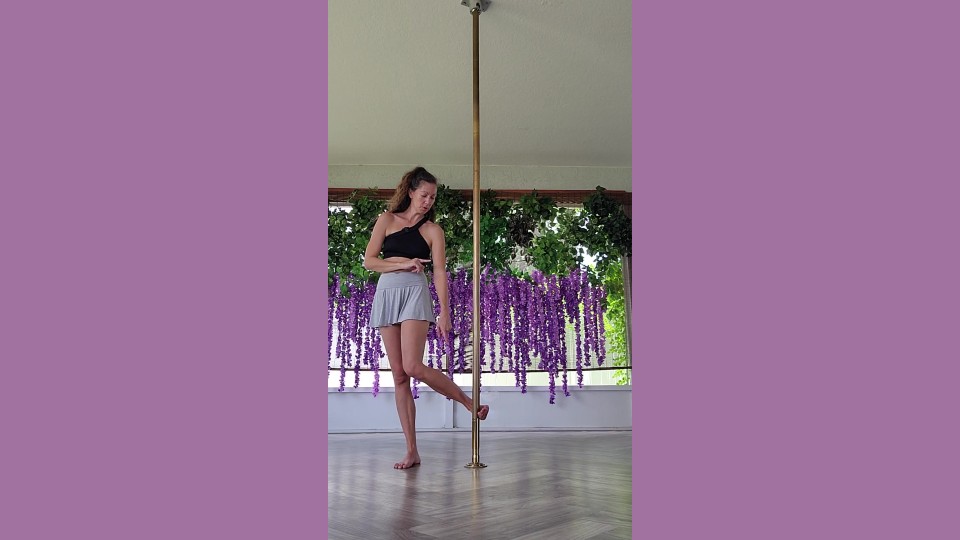
Duration: 00:54:23
Today you’ll revisit my second class, pole flow. Just as you did yesterday, if there is an area you’d like to skip over feel free. Take this time to focus on what you enjoy the most, or feel you struggle with as either option will result in improvement.
Pro tip: So how long will it take you to “master” flow or any other pole skill? I thought this breakdown might help put things into perspective:
The time to master a skill varies significantly, with some theories suggesting it takes 10,000 hours for true mastery, while others propose it takes only 20 hours to become proficient. The actual timeline depends on factors like the skill’s complexity, practice consistency, and the effectiveness of practice methods.
Time to achieve proficiency vs. mastery
- Proficiency [20 hour rule]: It takes about 20 hours of focused, deliberate practice to become reasonably good at a new skill. This is enough to overcome the initial learning curve and become competent.
- Mastery [10,000 hour rule]: True mastery and expert-level performance are believed to require roughly 10,000 hours of practice. This rule was popularized by Malcolm Gladwell and is often cited as a benchmark for becoming a top performer.
Factors that influence the timeline
- Skill complexity: More complex skills, like leadership or conflict resolution, take longer to develop than simpler ones.
- Frequency and consistency: Practicing regularly and consistently is crucial for improvement.
- Practice method: The effectiveness of practice is just as important as the amount of time spent. Deliberate practice, which involves setting goals and focusing on weaknesses, is more effective than simple repetition.
- Mentorship and guidance: Having a mentor or taking courses can significantly speed up the learning process by providing guidance and helping you avoid common mistakes.
- Variety of practice: Practicing a skill in a variety of circumstances can lead to more robust mastery.
How to learn a skill faster
- Focus on focused, deliberate practice: Dedicate time to practice with a clear goal in mind, focusing on areas where you are weak.
- Break it down: Deconstruct the skill into smaller, manageable parts and focus on mastering each one before moving on.
- Seek feedback: Get feedback from others to identify blind spots and areas for improvement.
- Find a mentor: A mentor can provide valuable guidance and accelerate your development.
All of the above is provided right here, I’m happy to help you on this journey! xoxo

Day 27 ♥️
Yay for rest days 😊 especially after yesterday’s day where nothing went right
For sure!