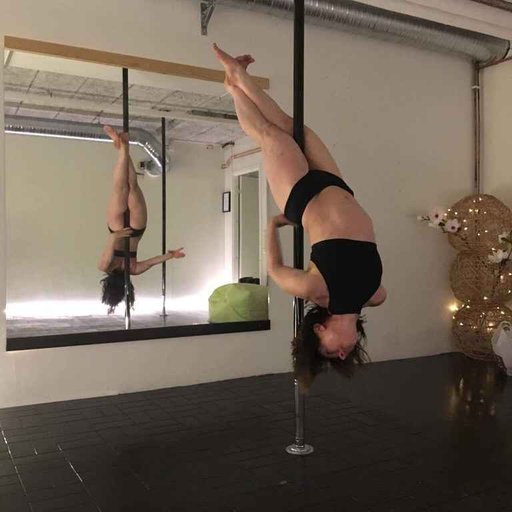
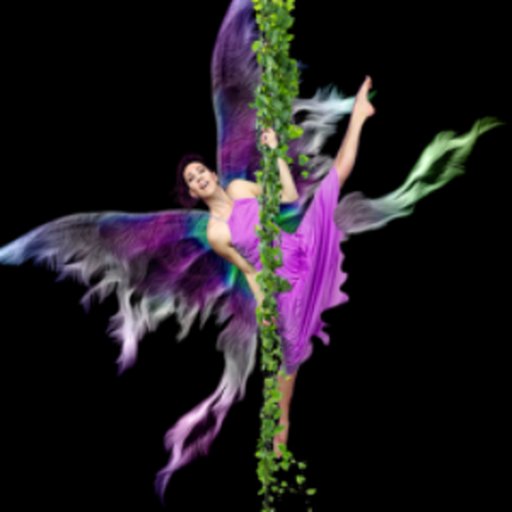
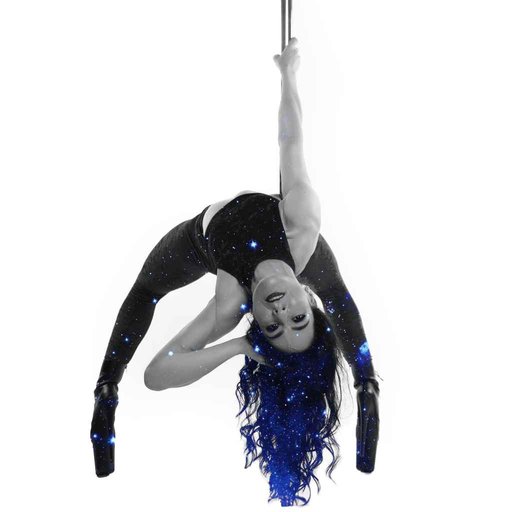
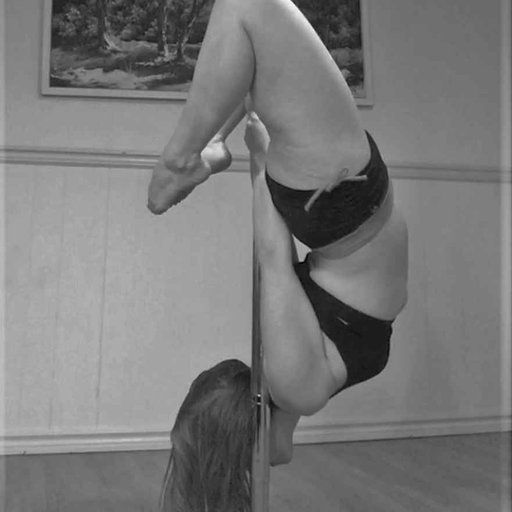
Here's how I teach this move now and in person.
First, I don't mention head position and see what they naturally do. If they don't seem to have a preference I teach head looking at the floor just as you would for any other balance moves on the ground. Like handstand, in fact try this. Do a handstand in the middle of the floor and look up, unless you have a solid handstand and lots of experience, head up or neutral will not (usually) be an optimal position for learning balance. Looking at the floor is usually the most common instruction and usually most helpful. I say usually because there are always exceptions and a good instructor knows this and will be able to accommodate. This is why I teach head looking at the floor first.... once they feel steady in balancing, you can move on to neutral head (looking straight at the pole) or looking up at the pole or ceiling. If the student naturally looks up, that totally fine too, but if they really struggle with balance I then have them try head down to see if that helps. Switching head placement can be an ah ha, moment in balance!
As far as hollow body, it's not such an issue with ayasha because the legs are open and not straight. This means a lot of the "hollow" will come from correct placement of the hips and legs, as in teaching to rotate from the hips (turning knees to the floor) instead of just open leg into straddle v, ( I cover this in a few lessons ) and insuring they push through the shoulders correctly and avoid blocking them into a back and down placement.
Now if you're talking about getting into an Ayesha from a cartwheel mount or handspring, looking up at the pole first can help them learn where to hook the foot when starting with half cartwheel.
Anyway my point is, either way is fine, go with what is most comfortable and once you nail your balance you'll be able to place your head where ever you like!! :)