
StudioVeena.com › Forums › Discussions › straight edge
-
straight edge
Posted by Wanda G on December 7, 2009 at 6:52 pmiv been pole dancing for 4 months now and im very comfortable with inverts. i feel like i need to learn some new moves cause in my videos all u see me doing is the sorpio gemini and inverted crucifix. i want to learn the brass monkey and aysha but i dont know if im ready. In a week i’ll be done with my finals and i’ll have lots of time to practice and one of my goals is to learn the straight edge cause if u can do that then u can do almost anything. i need some advice as to how to go about it. maybe theres a trick that i am not aware of that will help me with the straight edge.
Mary Ellyn replied 16 years, 2 months ago 13 Members · 25 Replies -
25 Replies
-
I totally know that feeling of "being stuck" with the same moves. https://www.studioveena.com/img/smilies/icon_e_confused.gif I’d suggest that you don’t start off with the straight edge as your next move though. The aysha (straight edge split) is easier to balance for most people. https://www.studioveena.com/img/smilies/icon_e_wink.gif
Can you caterpillar climb up the pole? If not, you should work on that first, since if you can’t climb, it probably means you’re not comfortable removing your legs from the pole yet, & the climb is the safest/easiest way to learn/gain the strength to do so.
So from my personal experience (& it think this is logical), here’s the order in which i think it’s best to proceed: Caterpillar, caterpillar climb, aysha, straight edge, & then brass monkey (unless you can invert directly into it).
If you can already caterpillar climb, then just disregard this & sorry it wasn’t much help!! good luck!! https://www.studioveena.com/img/smilies/icon_e_biggrin.gif https://www.studioveena.com/img/smilies/icon_rendeer.gif -
Hey wanders! I agree with the last post. I can’t yet caterpillar climb and it’s exactly right that I don’t feel good enough yet to let go with my legs so I haven’t done a regular aysha yet. I’m trying to think of the next moves for you … maybe a butterfly and extended butterfly an iguana mount and a superman (unless you’ve already got those!!) I also recently got a reverse aysha so maybe you could go that way.
Next step for me…learn to caterpillar climb so I can start to leg go with my legs some!!
Happy poling! -
thank u so much for the advice! both of u make a good point to learn the caterpillar first. personally i dont like the caterpillar but u guys are right before i can move on to more advanced moves i will have to get comfortable with it. i will practice the caterpillar everyday to strengthen my back i just cant wait to get the brass monkey cause it looks so impressive!
-
I agree with the above posts, you cannot execute any of the moves without the strength to caterpillar climb.
PLEASE use a crash pad or spotter (or both). My worst pole injury was me falling off the pole when I was learning this. I was so psyched that I did it about 3 times in a row….well by the last time my arms had fatigued and when I let me legs off the pole I came crashing down. Luckily I turned and fell on my shoulder or I probably would have ended up in the hospital.
What about working on headstands/handstands? I found that these helped me A LOT with the core strength and balance needed to get the straight edge.
Even though I have a full arsenal of "tricks" most of my poling is transitions and spins with a few inverts thrown in for dazzle.
-
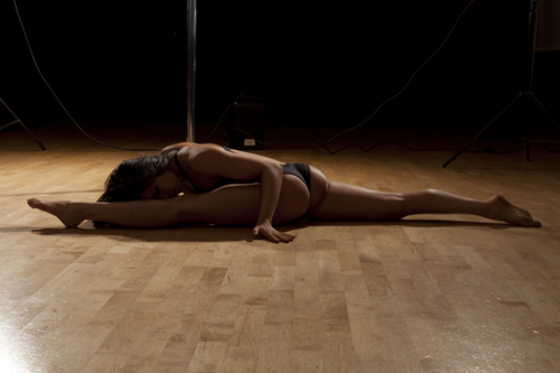
I totally know that feeling of "being stuck" with the same moves. https://www.studioveena.com/img/smilies/icon_e_confused.gif I’d suggest that you don’t start off with the straight edge as your next move though. The aysha (straight edge split) is easier to balance for most people. https://www.studioveena.com/img/smilies/icon_e_wink.gif
Can you caterpillar climb up the pole? If not, you should work on that first, since if you can’t climb, it probably means you’re not comfortable removing your legs from the pole yet, & the climb is the safest/easiest way to learn/gain the strength to do so.
So from my personal experience (& it think this is logical), here’s the order in which i think it’s best to proceed: Caterpillar, caterpillar climb, aysha, straight edge, & then brass monkey (unless you can invert directly into it).
If you can already caterpillar climb, then just disregard this & sorry it wasn’t much help!! good luck!! https://www.studioveena.com/img/smilies/icon_e_biggrin.gif https://www.studioveena.com/img/smilies/icon_rendeer.gif
that was exactly the order in which i’ve learned those moves as well. i’m still working on the split grip ayesha though– i do it with elbow or forearm grip. i’ve been following the tips of people on youtube and this board in working up to my split grip ayesha.i’m not sure if you’re interested, but i think it’s also really important to work on spins and transitions aroudn the pole. i take classes in a couple different places, and sometimes you see women who are very athletic and can do the tough tricks but they are not graceful, they aren’t dancing, and they are just doing trick after trick. i find that the women who have it all are the ones i find inspiring and beautiful to watch, and from what i’ve seen, that grace takes quite a while to develop.
-
I’m a big wierdo man. I’m learning things all out of order.
I can do a straight edge, aysha (both split grip) and reverse aysha but I can NOT caterpillar to save my life!
I don’t know what it is.I try to push up and then I freeze LOL. I’ve been working on this move since I started inverting months ago and just can’t get it LOL. WTH! -
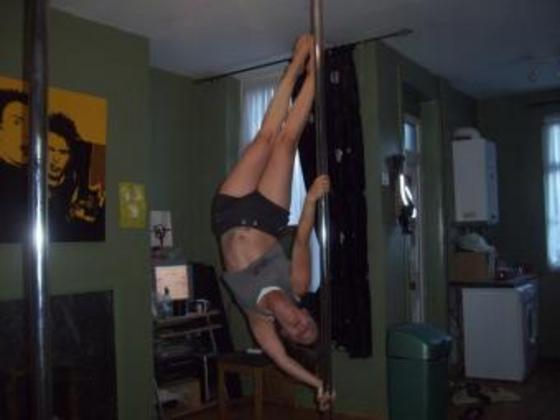
I’m a big wierdo man. I’m learning things all out of order.
I can do a straight edge, aysha (both split grip) and reverse aysha but I can NOT caterpillar to save my life!
I don’t know what it is.I try to push up and then I freeze LOL. I’ve been working on this move since I started inverting months ago and just can’t get it LOL. WTH!I’m with you on this one SissyBuns. I can do all the split grip stuff, but ask me to do a forearm or elbow grip or the caterpillar climb and I’m screwed. I found the split grip easier because you don’t have to do the caterpillar malarky to get into it like you seem to have to do with the other grips, you can just go into it from an inverted crucifix leg hold type thing https://www.studioveena.com/img/smilies/icon_scratch.gif https://www.studioveena.com/img/smilies/icon_e_biggrin.gif
Mind you, it did take me a good few months (not constantly) of practice to get the split grip and I now find it easier to go into the jack-knife then I can move from there into ayesha and then straight edge. Just keep trying and you will find the one which suits you best eventually. https://www.studioveena.com/img/smilies/icon_e_wink.gif
-
I’m a big wierdo man. I’m learning things all out of order.
I can do a straight edge, aysha (both split grip) and reverse aysha but I can NOT caterpillar to save my life!
I don’t know what it is.I try to push up and then I freeze LOL. I’ve been working on this move since I started inverting months ago and just can’t get it LOL. WTH!I’m with you on this one SissyBuns. I can do all the split grip stuff, but ask me to do a forearm or elbow grip or the caterpillar climb and I’m screwed. I found the split grip easier because you don’t have to do the caterpillar malarky to get into it like you seem to have to do with the other grips, you can just go into it from an inverted crucifix leg hold type thing https://www.studioveena.com/img/smilies/icon_scratch.gif https://www.studioveena.com/img/smilies/icon_e_biggrin.gif
Mind you, it did take me a good few months (not constantly) of practice to get the split grip and I now find it easier to go into the jack-knife then I can move from there into ayesha and then straight edge. Just keep trying and you will find the one which suits you best eventually. https://www.studioveena.com/img/smilies/icon_e_wink.gif
I need to start working on the other grips. I’m very comfortable with split grip and I think it’s exactly because of the reason you put. Since I can’t caterpillar I’m not able to do the other grips, so split grip is the only option that makes sense LOL.
-
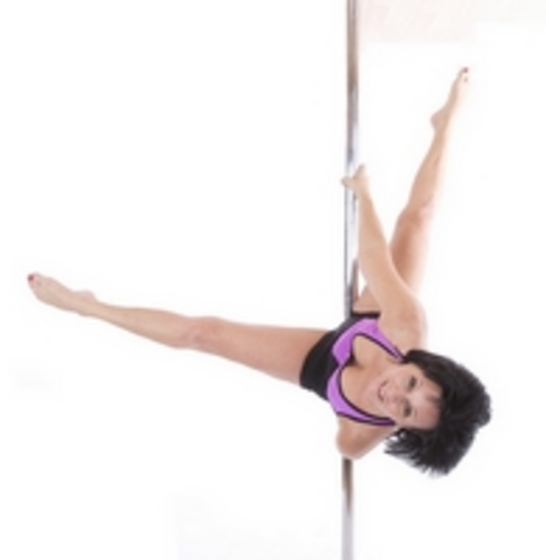
You might want to try the chinese grip for your straight edge. While it still takes strength it doesn’t require as much arm strength as the forearm grip.
-

You might want to try the chinese grip for your straight edge. While it still takes strength it doesn’t require as much arm strength as the forearm grip.
What is the chinese grip?? I just learned forearm & elbow aysha (not completely comfortably/confidently yet), and am working up to split grip.
Also, Wanders, for me practicing the caterpillar climb before the aysha helped me get the forearm grip first because you use it to climb (or I guess elbow too, but I find the forearm easier in the caterpillar climb). Then when you start trying aysha you are already familiar w/ the grip. Hope that helps!
Oh, also, I worked on lunchbox and bow & arrow in between where you’re at and starting aysha…
-
The Chinese grip is a wide split grip with both arms relatively straight but the top hand is in a thumb-down cupped grip hold. (do not wrap the thumb on the top hand)
-
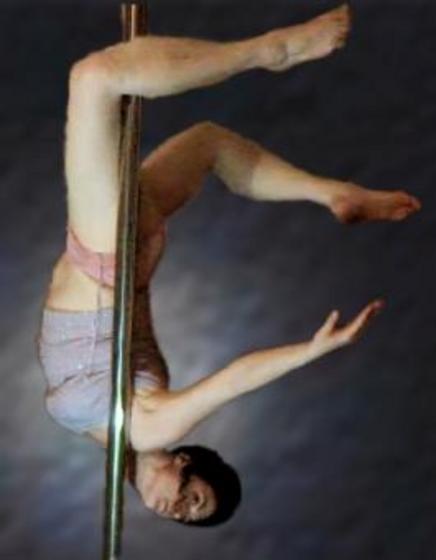
Wanders — If you are comfortable w/ crossed ankle release, you can "cheat" and get brass monkey. Here’s a video where I was playing with it. Note: I didn’t actually GET the brass monkey in that clip, but you can see the way you get into it.
http://ver3.studioveena.com/lessons/view/1390
Veena does it beautifully in one of her dances. Sooo sorry I can’t remember which one!!
Mindy
-
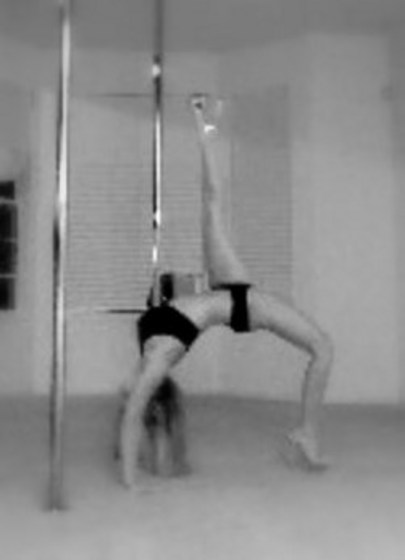
i got my brass monkey from the floor, i get into a handstand then hook in for my brass monkey…to get the feeling, so you could try that. Im working on my SG straight edge bc i have my ext butterfly super easy now from catrwheel mount, but like everyone said they all suggest caterpillar FIRST…sooo im working on that (not doing very well haha). When i was stuck with those moves you are, i learned butterfly, and ext butterfly, plank, iguana, and practiced superman from the ground too. I want my straight edge so bad…like u said, BIG building move there =) good luck!!!
-
All I can say for now is: Crazy a** caterpillar climb! https://www.studioveena.com/img/smilies/icon_twisted.gif
I just learned to do a couple of crappy ones in a row on one side. That’s about it.
-
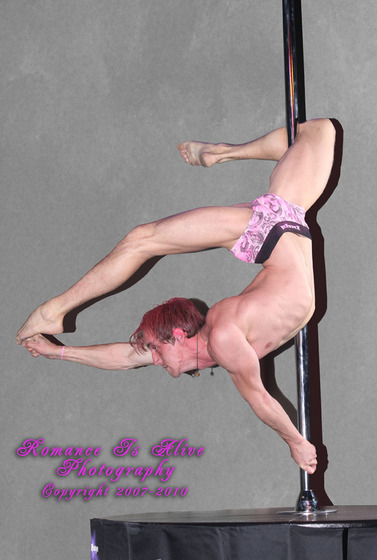
Hi folks!
All this talk of caterpillar and the trouble it poses made me wonder if some talk of technique might be helpful, so I wanted to share the method I use for the climbing caterpillar. This is not the only way to perform this move, and it’s not necessarily the right way, it is only a way to do it.
So the way I perform this move is that I get into inverted crucifix position, put both my hands on the pole near one-another with thumbs facing down and push out from the pole, not up. After pushing myself out, then I begin pushing up while simultaneously pulling up with the thighs. My biggest problem learning this move was that I wanted to push upward first, not realising that this move wasn’t exclusively a matter of shoulder strength, but that it engages the whole body, distributing its weight among various muscle groups working together. So after I have pushed out, and then elevated so that my chest is near the pole and my bum is sticking out, I use the elbow grip to let go of the pole with my legs, and move them to a higher position, so that I am in inverted crucifix position again and ready to push out from the pole a second time to repeat the process.
For myself, I will share that the key that unlocked the upper body strength moves for me was the cartwheel mount handspring. After I got that move, then I had enough confidence to hold myself away from the pole upside-down in other positions, like Aysha and Straight Edge. Personally, I like the split grip and the twisted grip for performing Aysha and Straight Edge on a static pole, because the "wow factor" is a little higher for these, and they allow you to move with a little more control and freedom. I do, however, like to use the elbow grip to do a grossly extended Aysha where my back and hips are level with the floor. And I will use ONLY the elbow grip for Ayshas on the spinning pole, because otherwise I fear losing my top bracket throwing myself right off of the pole, or not being strong enough to keep balanced.
Last, I wanted to address overhand grips which were talked about in this thread. These are grips where the top bracket has the thumb pointed downward. Maybe there are others who find these grips, such as the "true grip" (both thumbs down) and the "Chinese Grip" (both thumbs facing each other) easier than myself, but I think these are the most unstable and physically taxing grips possible. Try a cartwheel mount handspring with the overhand grip and you might understand. My experience with those grips is that I can get myself up, but I have to be mentally prepared to make an impromptu landing, because otherwise, I will fall. If a grip is needed that requires less physical exertion, the elbow and forearm grips are great for that. But still, working for these moves in split and twisted grips is a worthy goal with a big payoff!
-
I forgot, I also wanted to mention that that practicing the Flag and it’s variations can help greatly with brass monkey, if brass monkey is one of the goals being worked toward. The flag position is an excellent way to mount and dismount from brass monkey.
-
Last, I wanted to address overhand grips which were talked about in this thread. These are grips where the top bracket has the thumb pointed downward. Maybe there are others who find these grips, such as the "true grip" (both thumbs down) and the "Chinese Grip" (both thumbs facing each other) easier than myself, but I think these are the most unstable and physically taxing grips possible. Try a cartwheel mount handspring with the overhand grip and you might understand. My experience with those grips is that I can get myself up, but I have to be mentally prepared to make an impromptu landing, because otherwise, I will fall. If a grip is needed that requires less physical exertion, the elbow and forearm grips are great for that. But still, working for these moves in split and twisted grips is a worthy goal with a big payoff!
David the reason you may find the overhand grip more difficult is actually because as a male your strength lies in different areas. The traditional grip (both thumbs up) requires more arm strength and as a male this is naturally easier for most men just as the traditional flag is an easier move for most men than they are for women.
The overhand grip (though I’ve never seen anyone do one with the thumbs toward each other – how interesting!?) is more about agility and learning to balance the move. It actually requires less arm strength. Just as a full bracket split grip is easier to hold than a half bracket because the full bracket requires less arm strength.
So my female students with less arm strength are consistently more successful at the overhand grip where my stronger females students will get the traditional grip faster as you can balance that move easier – as long as you are strong enough.
-
Hi Empyrean!
I looked at your profile picture and now I’m curious; did I recently comment on a wonderful performance that you posted to YouTube? Perhaps you only resemble the lady I had in mind, but if it was you, I was very impressed. Accept my apology if I am mistaken.
I reread my comments about overhand grips and thought myself to sound tactless and authoritative, and wish I had presented my experience differently. Please understand that there is something I recognise about myself, and that is that even though I can perform some advanced moves, that only makes me a beginning dancer who can perform some advanced moves, not an advanced dancer, and I have little experience with instruction. Please accept my effort to humble myself.
Let me first share that I was under the imrpession that the traditional Chinese pole acrobats performed their flagpole move using a grip with both thumbs facing in toward each other. It is highly possible that I have been inaccurate. I thought that this was the difference between the Chinese grip and the True grip, which both use an overhand grip in the top bracket, but I am entirely open to being corrected. I wonder if possibly the old Chinese grip was eschewed by Western acrobats in favor of a more practical thumb down in the lower bracket.
This may speak to how out-of-the-loop I am in regard to formal pole training since I’ve never had the privilege of having studio time with an instructor, but I didn’t even know that overhand grips were being taught to users of dance poles! I thought it was something primarily used on the Chinese pole. After reading your post I feel inspired to attempt to do some work with overhand grips.
My previous trouble with overhand grips, aside from feeling kind of uncontrolled, is equally an issue of hand strength as arm strength as I really feel like my hand will slide right off the pole. Do you think that this might speak more to technique involved in the way I tried to use this grip than it has to do with the grip itself? I would enjoy any suggestions you have about using overhand grips and the moves for which this grip is useful. Perhaps the "true grip" deserves its own thread on this board!
-
Hey David…you didn’t sound authoritative or tactless at all! Also, the various grips are just like different pole moves…a lot of people call them by different names.
I learned it as the "Chinese grip" intially with the OH hand grip with both thumbs down…but that is just what it was called by the person I was taught by (Katie Coates) and though I was also coached at that time by a Chinese pole instructor I met through her, he didn’t call it anything as he barely spoke English! LOL At the time the only person I ever saw do that hold outside of some pole dancers was Dominic Lacasse so I have no idea if anyone else holds it differently.
I just figured that being male, and in most cases men being naturally stronger, you may have felt the true grip required strength you didn’t have when you struggled with it. I really believe your struggle is learning how to balance this hold as balance and technique are the important concept toward this hold.
As I said, the concept behind the OH hold is much like a full bracket grip (both thumbs up) in a carousel spinm (kneeling position facing pole) which makes the hold much easier. It’s physics – the triangular bracket is easier to hold than the split grip with both thumbs up.
Same thing in the OH straight edge.
I have done the OH grip for about 3 years now and started when I wasn’t very strong yet. I only started doing the grip with both thumbs up (upper arm slightly bent) after I kicked up my strength training. In fact it was super easy to acheive that hold after I got stronger.
Which hand is it that feels as though you’re going to lose your grip? The higher hand or the lower hand?
-
BTW…I dont ‘THINK I received a comment from you on Youtube if you use the same screen name on there as here. https://www.studioveena.com/img/smilies/icon_e_smile.gif
-
Glad to make your acquaintance. Sorry I confused you with someone else, I just saw a similar hair colour and style, plust the mile-long legs, and thought it may be the same person. If it means anything, she was lovely. https://www.studioveena.com/img/smilies/icon_e_biggrin.gif
But I think I have an idea of what you’re describing in terms of the differences between where men’s and women’s strength lies. So if balance is the keyword with the overhand grip, ones weight is primarily placed on the lower bracket, and the top hand is doing more stabilising of the body weight rather than helping to hold it. Am I warm at all? I have grown accustomed to the idea that in most grips, inverted or upright, the higher bracket carries most of the weight and the lower bracket primarily pushes the body away from the pole rather than holding it up. This might possibly be one of the reasons I have not been successful in my previous attempts at overhand grips.
To answer your question, in the overhand grip, I felt as though my top hand was going to slip. I think this is a question of finger strength, perhaps, more so than that of the arm. Because my thumb and forefinger are naturally stronger than my other fingers, I think the split and twisted grips feel more secure. The thumb down in the lower bracket supports and pushes the weight of my body up, while the thumb up in the top bracket of those holds enables that grip to more efficiently pull, direct, and control the movements and balance checks involved, since in an inversion, the top part of the higher bracket would be subject to more force than the lower part of the higher bracket. I hope I am making sense, sometimes I lose myself in complexity.
I have never tried an inverted grip with both thumbs up, though…! How interesting. I have only done spins, climbs, and choppers that way. I would imagine I would feel kind of unstable in the lower bracket with the thumb facing up regardless of what my top hand did, though I have never tried. In my next practice I’ll be sure to try some of these grip variations. I wanted to have a practice tonight but the apartment feels too cold and so do my muscles. https://www.studioveena.com/img/smilies/icon_cry.gif
I might private message you to let you know how it comes out! Please feel free to share any suggestions you have so that I can get the most benefit out of this grip; I’d be grateful.
-
good call on flag dismount from brass monkey David
For real.
-
Glad to make your acquaintance. Sorry I confused you with someone else, I just saw a similar hair colour and style, plust the mile-long legs, and thought it may be the same person. If it means anything, she was lovely. https://www.studioveena.com/img/smilies/icon_e_biggrin.gif
Well thanks! https://www.studioveena.com/img/smilies/icon_e_smile.gif
But I think I have an idea of what you’re describing in terms of the differences between where men’s and women’s strength lies. So if balance is the keyword with the overhand grip, ones weight is primarily placed on the lower bracket, and the top hand is doing more stabilising of the body weight rather than helping to hold it. Am I warm at all? I have grown accustomed to the idea that in most grips, inverted or upright, the higher bracket carries most of the weight and the lower bracket primarily pushes the body away from the pole rather than holding it up. This might possibly be one of the reasons I have not been successful in my previous attempts at overhand grips.
Yes you’re correct the weight is on the lower hand/arm and the upper is balancing – however, look at it this way. Your lower hand is now in the same position as your upper hand was when you were upright because it’s now over your head!
Your hand IS pushing your body weight up, but not with your body suspended below it as it would be in a full bracket spin. Does that make sense? You have to look at this like the Ayasha…same thing. Your body weight is distributed DOWN to the hand that is closer to the floor.
With this grip you will also find your body out and away from the pole a bit more than you do with the traditional grip where the thumb of the upper hand is upwards.
ALso, consider extending your index finger on that hand that is closer to the floor…that provides more strength for your hold.
To answer your question, in the overhand grip, I felt as though my top hand was going to slip. I think this is a question of finger strength, perhaps, more so than that of the arm. Because my thumb and forefinger are naturally stronger than my other fingers, I think the split and twisted grips feel more secure. The thumb down in the lower bracket supports and pushes the weight of my body up, while the thumb up in the top bracket of those holds enables that grip to more efficiently pull, direct, and control the movements and balance checks involved, since in an inversion, the top part of the higher bracket would be subject to more force than the lower part of the higher bracket. I hope I am making sense, sometimes I lose myself in complexity.
This MIGHT be resolved when you consider that your body is a bit extended away from the pole as I explained above. Again. compare it to the Ayasha where holding your hips away from the pole assists in providing counter balance to hold on. Of course, your body is not nearly as far from the pole as it would be in the Ayasha but just a bit more than with a traiditional grip.
I have never tried an inverted grip with both thumbs up, though…! How interesting. I have only done spins, climbs, and choppers that way. I would imagine I would feel kind of unstable in the lower bracket with the thumb facing up regardless of what my top hand did, though I have never tried. In my next practice I’ll be sure to try some of these grip variations. I wanted to have a practice tonight but the apartment feels too cold and so do my muscles. https://www.studioveena.com/img/smilies/icon_cry.gif
My mistake in trying to explain and compare this hold to the full and half bracket when you spin. I didn’t mean that you can do the straight edge with both thumbs up…at least I don’t thinK I’ve seen anyone do so and I certainly cannot. I was just comparing the way it’s easier to hold your weight with a full bracket grip (thumbs in opposing postions) compared to the half bracket in a spin.
I might private message you to let you know how it comes out! Please feel free to share any suggestions you have so that I can get the most benefit out of this grip; I’d be grateful.
Any time! https://www.studioveena.com/img/smilies/icon_e_smile.gif
-
Deleted User
Deleted UserDecember 26, 2009 at 12:30 amawesome thread!!! azriel, thanks for posting what you did, ive been wondering what a good progression is for inverts, now if i could just get my pole back i could start working on this stuff! https://www.studioveena.com/img/smilies/icon_e_smile.gif

Log in to reply.