
StudioVeena.com › Forums › Discussions › Proportions and flexibility
-
Proportions and flexibility
Posted by Lina Spiralyne on April 3, 2014 at 4:42 amI came across this blog about body proportions and how they have impact on how flexible we look. It’s something I’m analysing all the time (Obsessed? Yes!) so I love when someone else brings it up. Simply, how flexible a person appears in different poses is not only due to how bendy they are but also if they for example have long or short shins compared to thighs, long/short arms/back, even big/small head etc. A quite obvious example is the king cobra or any other pose where the feet are supposed to meet up with the head. If some one has short thighs and long shins (big feet also a +) they will have an advantage over those who don’t.
The article brings up a bridge as an example, where long shins instead are considered a disadvantage by the author. It can be annoying not being optimized for something you want to do (I’m for example not optimized for king cobra), but the differences is also one of the thing that makes it interesting to look at different people doing the same thing. If everyone were the same it would get a bit boring (just like with pole dancing styles).
I understand if not everyone shares my obsession but maybe it can explain something to someone I think it was also interesting to see how much this woman has managed to improve her backbend. From having a “coffee-table” to a back ankle grab in about six years, especially considering that she’s now somewhere in her forties.
Lina Spiralyne replied 11 years, 11 months ago 14 Members · 25 Replies -
25 Replies
-
That was really interesting. I have long legs and long arms compared to my torso (I’m pretty sure) but my back bend still look like a coffee table, lol.
Thanks for the post.
Xx
-
Anyone can get the coffee table-look of course, it’s most of all about the flexibility. Keep working on it and the table will sooner or later not have room for the cookie-plate anymore 🙂
-
Yup, definitely dealing with moving past the coffee table myself – I’ve seen a lot of gain the past few months but am still miles away from grabbing my feet… flexibility seems to be much more of a slow process now that I’m older. Thanks for the read!
-

I loved this article!! it is very interesting and encouraging as well. now, I’m really interested in pics of peoples back bends. I don’t really know what mine looks like. I think I have a short torso, long arms, don’t know about my legs. they look short and squatty to me! haha! I will have to really look at my back bend. I saw a picture of alethea Austin and her back bend was really coffee table and we know she is super flexy too. it could have just been that moment the pic was taken. but I thought it was interesting.
-
Nice to hear some of you found it interesting!
@lilred: Maybe I’ll not be the only one here with this interest then 🙂 Regarding Alethea, was she maybe wearing heels on that picture? Since heels will lengthen the forelegs, it will in principle have the same effect as shortening the arms.
-

I’m so excited to see someone wrote about this, I also find it very interesting! Back when I started lifting weights it became pretty clear that short limbs were able to handle heavier loads, the muscle were not necessarily stronger but the leverage was different…..it use to frustrate me. lol So pole dancers keep this in mind when you get frustrated with things like Iron X and SM stalls!
Thanks so much for sharing this I think it’s really important for everyone to see, because we are not all the same and everyone has their strengths!
-
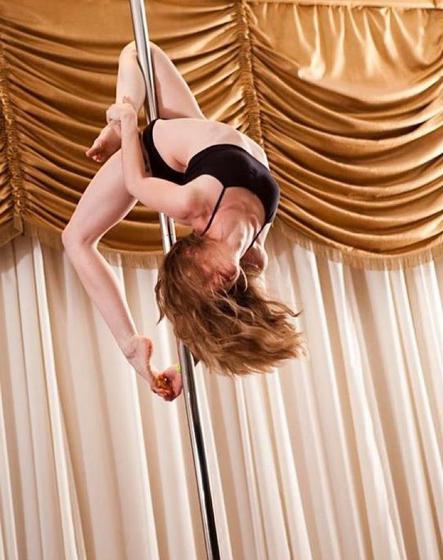
Uhm yeah this comes as no surprise to me….I am 100% convinced my long limbs and tall body type are why it’s taken me like 5 years to get close to my Iron X as compared to some people who have been at it far less time and can’t do some strength moves that I can do, but who can do that Iron X no problem. All in perspective…
-
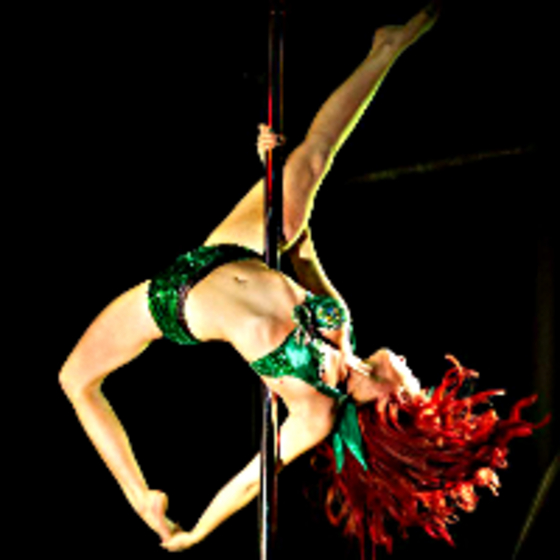
I saw this article and thought it was really interesting. I have really long arms and a really short torso and whenever I do a backbending pose you can see almost all of my flexibility is in my shoulders and mid/upper back and hardly any in the low back. I wonder if that is part of the reason why? I find it hard to hit the low back in a lot of poses.
-
I’ve considered this as well, but it’s awesome to have it explained with pictures and everything! I don’t do this kind of pose- something about it eludes me. So, usually I’m doing cat/cow, bow, and camel poses, as well as the “upward facing dog” I think. Moving my body toward and away from my arms seems to change the place where I feel the stretch (away from arms puts more of the curve into my upper back, toward arms puts more into my lower back).
I’m also thinking my hip flexors may be a bit tense for me to get a nice arch, since my back usually looks like a right angle (almost) and my hips are not doing anything! -
Lina, I think she was wearing heels. I even think I saw it in a youtube video of her but I just cant remember where. I looked at another video of her today and her backbend was perfect, (no surprise). but I swear I saw her do a backbend and it really struck me as unusual for her because it was very table top looking. she probably was wearing really tall heels. I did a back bend today and was shocked at how non-table-top it looked. I was surprised that my upper body had a nice arch because I feel like my upper body is sooo stiff. I really feel my backbends in my lower back but I make an effort to arch the spine evenly. my hip flexors are super tight( I’m working on that) I will try to get someone to take a pic of my back bend and post it here.
-
Very interesting and now I feel a 30 day back bend challenge coming so we can all see each others progress!
-
Yes really, how flexible/strong we APPEAR doesn’t make a one-to-one correlation to how flexible or strong we actually ARE. Just take the Allegra as another example. Long thighs, short shins, feet and arms will make it more difficult to grab the foot than if you have the opposite proportions. But like Veena said, everyone usually has something that works extra well exactly for them.
@Kyrsten: Possibly your long legs and short torso will make you wanna shift towards bending in the middle/upper back in a bridge, but if you see a general tendency to not bend so much in the lower part, then I think the reason is most likely that your spine is just more flexible in the middle. One of the problems in flexibility training is that we easily keep gaining more and more flexible where we already bend a lot, while the tight parts don’t get to do any work. It takes awareness to target what needs to be targeted most.
A short torso is as a matter of fact in most cases a good thing in backbending. The head will automatically look closer to the bum (appearence), but also, a small back has simply less tissue to stretch out.
-
This makes me kinda happy, actually. LOL
It’s so frustrating working with expectations, and different body types. I’ve been pole dancing for like, 8 months now, but only for the past 4 I started to take it a bit more seriously, and I want to progress so badly but my body keeps pulling me away from my objectives. I feel I’m a little overweight and I’m so insecure about the way I look on the pole, how I can’t get my body to go to the right positions…This text got me thinking about working WITH my body limitations, not AGAINST them.
Thanks Lina for sharing with us 🙂
-
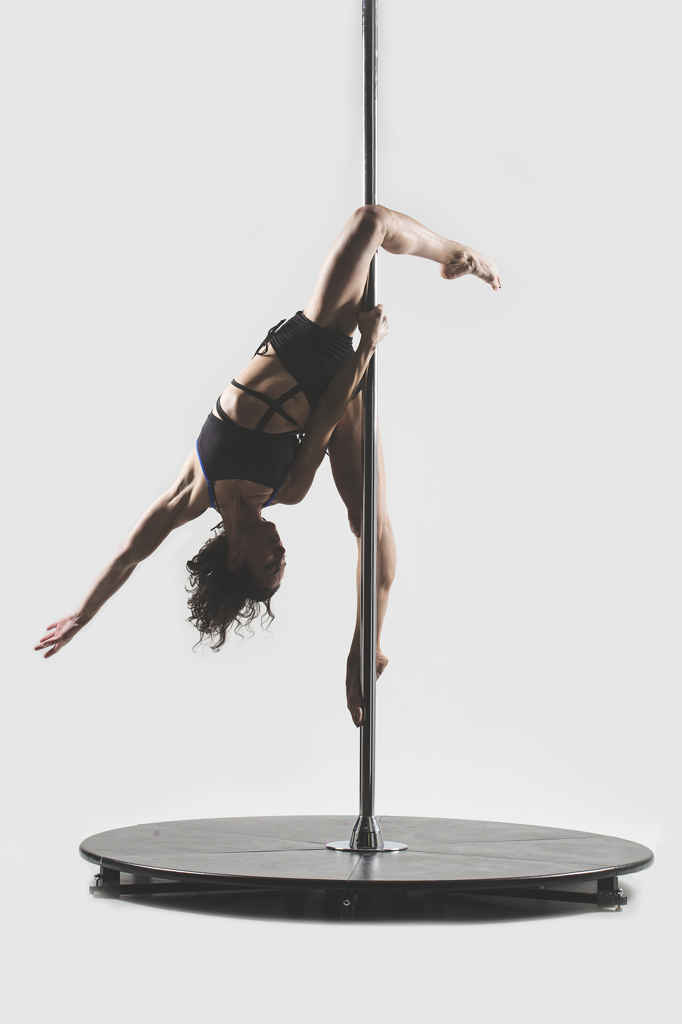
Yay!!! Finally a good use for my big feet! Lol. But, also I agree that body type plays a big role. I have a long torso which is good for pregnancy but, I think it makes a shoulder mount more difficult…at least that what I’m going with…
-
Take advantage of those feet! Put them on your forehead. From behind of course 🙂
Shoulder mounts are bad with long legs as well, if it helps to know! The whole body should be small to be optimized for that trick.
-
All this talk about proportions makes me want to start a study. I know for example that I am shorter than average but I don’t know whether my arms/legs/torso are long or short for my body. I found this article so interesting, and now I want to measure a whole bunch of peoples’ proportions to determine some “normal” ranges and to find out where I stand. 🙂
-
Me too dustbunny! this is all very interesting. a couple of weeks ago in class I thought about this thread. there was a student who couldn’t do elbowstands. it ended up being that she has a very short humerus (shoulder to elbow) and literally elbows were below her head height. it was impossible for her to get her head off the ground in this position unless she arched her head back. I was pretty impressed that our instructor thought to stop her and ask her to raise her arms. she quickly saw that her proportions needed a different technique for the move. I think it would have been easy to just assume that she was not strong enough to push off the ground but this was not the case.
-
Lilred, that’s a great example of how this type of knowledge can help us as instructors to determine what moves are suitable for whom or at least give us some insight as to why someone may be struggling with a certain move.
-
Maybe this weekend I’ll grab a wall and a measuring tape and see if hubby will be the first Guinea pig.
-
Oh I just thought of something else too. I’ll bet proportions change with age, what is normal proportionately for a 7 yr old will not be the same normal proportions for a 40 yr old. This is getting very complicated very quickly. Lol
-
@dustbunny: It’s so exciting, at least for us acrobats since it matters more than one may believe at first. Regarding finding out about ones proportions, there is one measure called “ape-index” where you simply measure your wing span (length from fingertip to fingertip when arms stretched out to the sides) and divide it by your height. If the ratio is greater than 1, the arms will be considered being on the longer side, and vice versa. But it says nothing about if they are long with respect to torso or so.
@lilred: Interesting example there. Truely that matters to her forearm stands. I suppose that when arching her back she could lift her neck and head a bit and make it easier. Good that your instructor was that attentive.
-

thank you for sharing and i’m delighted that this was helpful for you and your followers/students. it’s interesting to read and see how proportions play out in other areas besides yoga and back bending. thanks again! xo peg
-
Great article you wrote, as you can see many found it useful. And yes, in pole dancing these things play major roles!
-
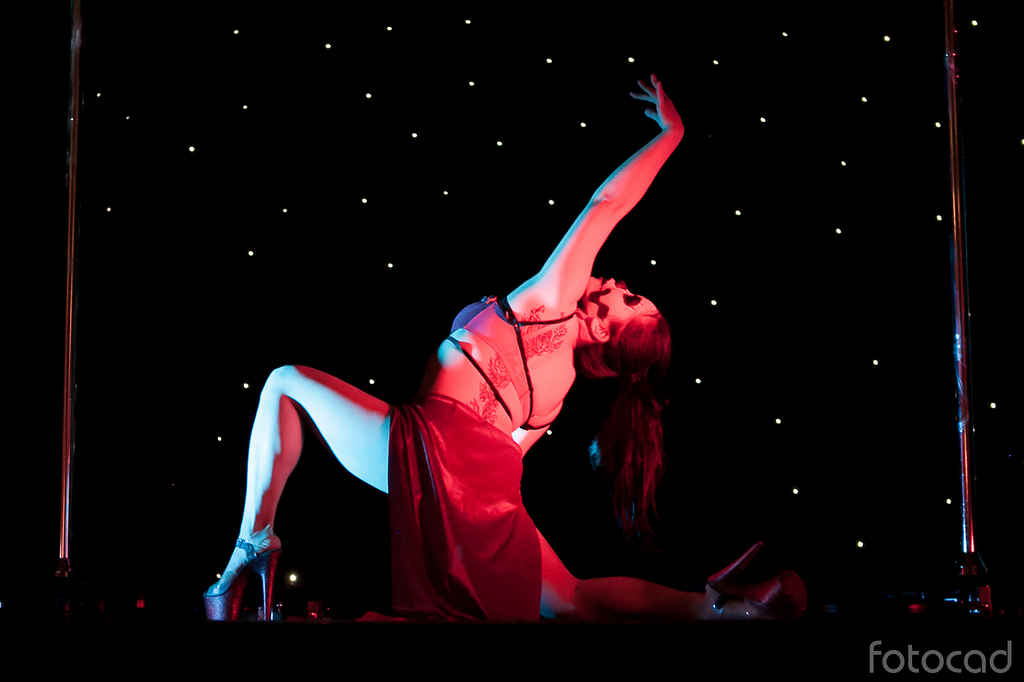
glad I read this as the ‘king cobra’ move (cobra with the feet touching the head right?) is one I have never ever got and having private classes with a flexibility teacher she noted that as soon as I bent my legs it knocked my form out of place and that my quads are the problem. I have good flexibility in my back, hips and have seen improvement in my shoulder flex too but in over 2 years I haven’t been able to get this move and I’ve just given up with it now. I hate my quads! haha
-
Yes King Cobra is when you bring feet to head. It does become more difficult to keep the form when the legs bend. So yes, could be your quads, at least partly. If you have long femurs in relation to total leg length it will also be more difficult. Other proportional factors may play in as well.
Log in to reply.