

StudioVeena.com › Forums › Discussions › My first fall…. onto my head :(
-

Knowing how to fall is fine…practicing falling that i do not agree with. Cinara had some great tips.
Accidents happen on and off the pole its part of life. I never thought I would break my foot while walking into my garage or have severe nerve damage from banging my elbow on a chair while sewing! LOL
I include exits as part of every lesson sometime multiple variations and always encourages everyone to use those and not jump out of a move. When I rode horse and was in figure skating they never had us work on "falling" . Any sport I have done they encourage you to relax if your falling.
-

Oh, in case it wasn't clear, I wouldn't ever suggest deliberately falling to practice falling! Just practicing safe exits – for instance I was never taught the basic exit out of a gemini – just to go into crucifix! And things like learning aysha make sure that at all times you're in a position to clamp your legs back onto the pole, and know to do that. (Personally I was happy to just flip right over into a crouch if I lost my balance, but it would be crazy irresponsible to suggest that as the ideal exit to other people!) And practicing inching down the polw one limb at a time is good practice for if you ever get tangled
-
I think some people might be saying different things here when we discuss learning how to fall. As Veena and I have said, practicing to fall is not a good idea. Learning techniques ABOUT falling such as relaxing, tuck chin, curl, extend arm to absorb the impact.
Since so many new people and people who are home learners read here we need to clarify that you should not practice falling and that practicing "exiting" a move doesn't mean how to fall out of it but how to reverse out of it or transition to another move.
Some people actually think they should be practicing falling and some studios I've run into actually practice it.
The example CInara gave earlier of reaching back up to grab the pole is one way. The layback is a good example..you lay back into it so you should practice always sitting back up to the pole so that if you fall, your instinct is to tuck and curl back up and you wind up in a tucked position.
-
thanks for the tips–that's what I was wondering. And to clarify–I've always been 'safety first'. I've had a pole for years and am only just now trying a lot of the advanced moves, because I'm not willing to risk injury trying something too soon. And I always throw down couch cushions. 🙂
-
I had a bad fall out of the bridge once, scared me for a while after that, i was really careful on the pole since then!
-
In my opinion there is just no way to simulate a fall – a fall happens quickly and unexpectedly. The falls I've had are moves that I thought I had down, they weren't new moves to me – they were things I had been doing for awhile at no point during a practice session could I have ever practiced falling out of them the way I did.
Instructors need to be talking about it, we need to be educating about it but when it happens it happens – you hope that your training and knowledge will give you something to do quicky in the moment as it's happening that will save you injury. Which is why I think it's important to have a significant amount of pole experience before doing laybcks and inverts. I think having a lot of experience on the pole has saved me numerous times from what would have been all out falls and injuries. Being able to squeeze the pole with some body part quickly or grab with the hands – even if it's not pretty has saved me a lot of times. With experience comes increased pole and body awareness and for me that has led me NOT to perform certain things under certain conditions or on certain types of poles.
-
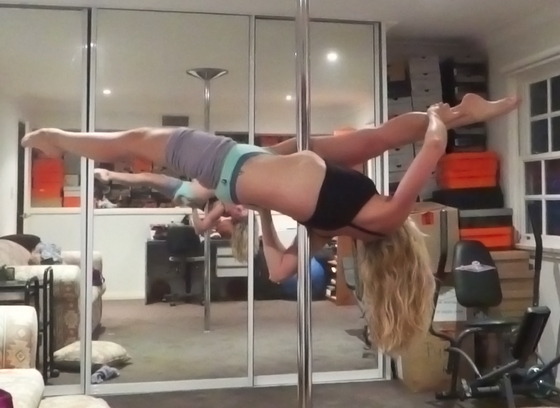
Charley – You're so right. I've never had an issue with the butterfly, then all of a sudden out of nowhere the floor was coming towards me (scary). Luckily I turned my face and landed side-on or I would have broken my nose.
I'll definitely be A LOT more careful and aware from now on, including with moves that I've been doing for ages, but even knowing how to get out of something safely (I've practised ways of getting out of the butterfly properly, so it's not like I didn't know how I was supposed to do it) doesn't guarantee you're going to remember what to do/have time to do the right thing when something goes wrong.
Log in to reply.